Include preparation, travel, and cleanup when you plan an appointment. Use the time your recent jobs actually took to make the next schedule more realistic.
A visit takes an hour, so you book the next one an hour later. Then there’s parking, packing up, and a customer who has one more question. By the second appointment, you’re already running late. When you plan a small business schedule, allow for the work around each booking as well as the appointment itself.
Count the time before and after.
Include preparation, travel, setup, and the notes or paperwork you need to finish afterward. At a salon, that might mean cleaning and resetting the station. For a service visit, it might mean loading tools and driving to the next address.
Look at a few recent jobs like the one you’re planning. How long did they actually take from start to finish? Use those examples to estimate the next appointment, especially if the time in the calendar has been consistently too short.
Leave room where a delay would hurt.
A familiar job nearby may need less space around it than a first visit across town. Check the appointments on either side before filling an open slot.
For example, suppose the job usually takes an hour and the next customer is twenty minutes away. An hour on the calendar won’t cover both. You also need to account for anything that regularly happens before you leave, such as cleaning up or answering the customer’s questions.
The amount of spare time depends on your work. Start with what you know about similar jobs, and have a way to contact the next customer if you’re delayed.
Check the details before confirming.
Make sure you have the service, location, contact information, and any instructions you need. A missing address or an unanswered question about access can derail a day that looked fine on the calendar.
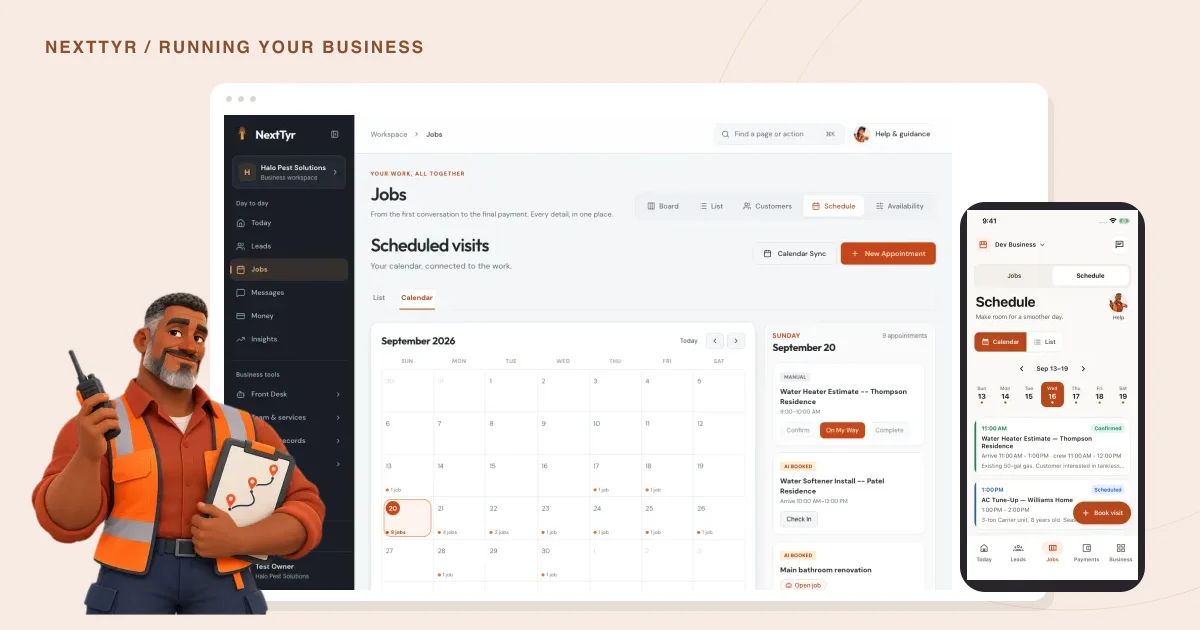
NextTyr keeps appointments and customer details together. You can review the schedule on your computer or check the next appointment in the mobile app. Use the controls below to see the actual calendar screens.
Notice what made today run late.
At the end of the day, look at where the timing went wrong. Did a particular type of work take longer than expected? Did travel eat up the gap between visits? Was there something you could have prepared beforehand?
Adjust the next booking that has the same problem. You don’t need to change everything after one unusual day, but a repeated delay is worth planning for. Give yourself enough time to finish the work and explain what comes next before you rush off.
TAKE A LOOK AROUND
See it in NextTyr.

Actual product · sample business · Your work calendarTap the image for a closer look.
Check tomorrow’s schedule
Check off each step as you go.

Want to see how this works in NextTyr?
Explore scheduling with Dispatcher